
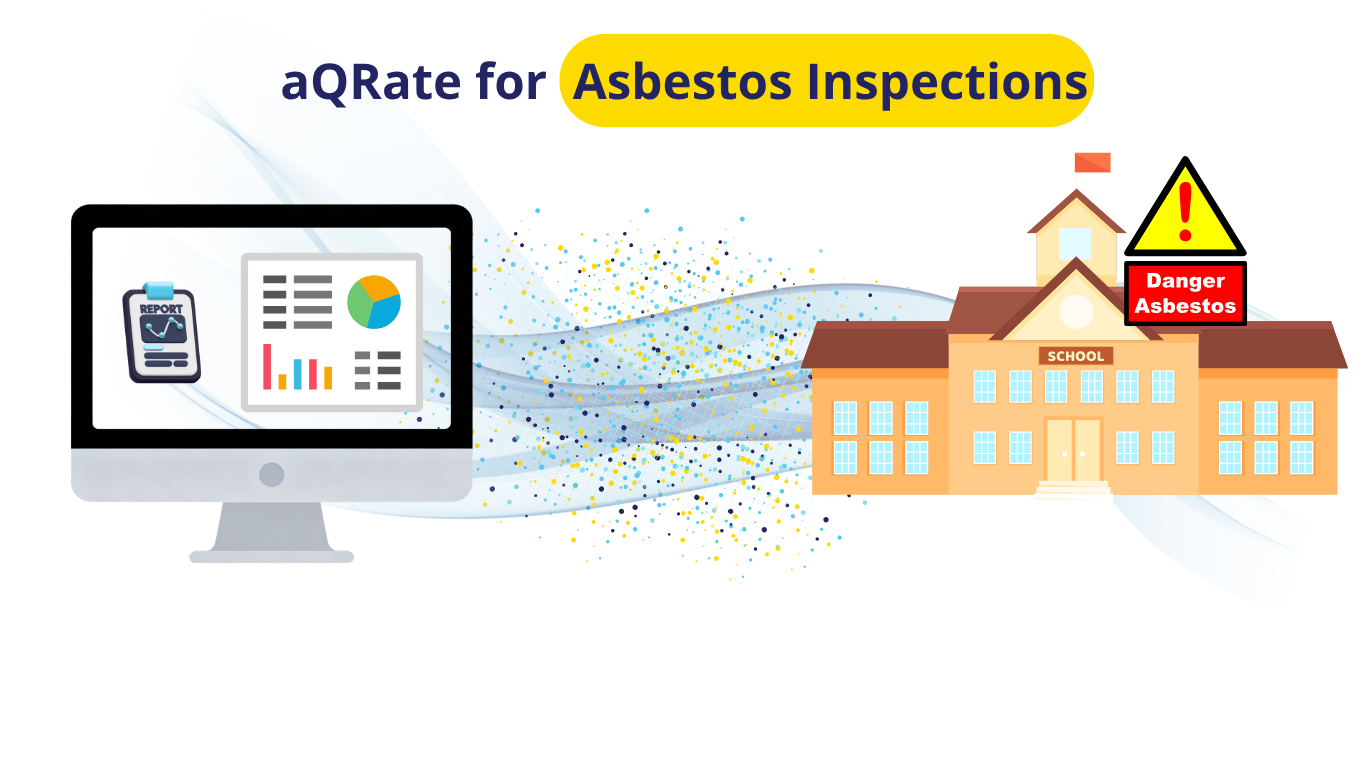
When it comes to hazardous materials management, scale changes everything. Juggling a handful of asbestos samples on a small residential project is annoying; managing an environment with 80+ bulk samples across a massive commercial or institutional facility is an absolute administrative nightmare.
For environmental consultants, the field work is only half the battle. The real drain on time, resources and ultimately profitability happens back at the office.
We recently put our data collection platform, aQRate by Roshan Water, into use for a demo use case to the test and see exactly how it transforms a medium-scale hazardous materials project. Here is the blueprint of that project and how the right digital architecture can fundamentally rewrite your firm’s profit margins.
The Scope: Oakridge Comprehensive Campus
To mimic the true "pain threshold" where traditional data tracking breaks down, we mapped out a pre-renovation asbestos survey for a complex mid-century institutional facility. The scope required absolute room-level precision across 4 macro-zones:
Wing A (Academic Block): 20 samples tracking repetitive materials (drywall compound, 12x12 floor tiles, mastic) across dozens of classrooms.
Wing B (Labs & Workshops): 20 samples mapping highly technical, high-risk materials (fume hood liners, chemical-resistant benchtops, Transite heat shields).
Wing C (Assembly & Food Service): 20 samples capturing massive square-footage materials (structural steel spray fireproofing, cafeteria popcorn ceiling texture).
Central Mechanical Plant: 20 dense, critical samples tracking friable thermal insulation, mudded pipe elbows, and high-temperature rope gaskets.
The Problem: The "Four-Headed Monster" of Field Collection
On a project of this size, traditional inspection workflows rely on fragmented, disjointed tools. Field technicians find themselves juggling:
Clipboard & Paper Logs to write down cryptic sample IDs and room descriptions.
A Personal Smartphone to take 80 different photos of grey, dusty materials that all look identical later.
Graph Paper to manually sketch the room layout and try to draw arrows pointing to sampling locations.
Office Excel & Word Entry where the real tedious work begins. Someone has to manually re-type handwritten notes, rename 80 image files, match them up to the right sample ID without making a mistake, and manually copy-paste laboratory results into text-heavy compliance templates.
When stakeholders demand to know exactly which sample came from which wall, any minor labeling error creates a massive legal and financial liability.
The aQRate Solution: A Single Source of Truth
Using aQRate’s nested, repeatable form structure, the field workflow is streamlined into a single mobile application that works completely offline.
The inspector opens the main form to log general site context, tags the specific zone (e.g., Central Mechanical Plant), and digitalizes the floor plan sketch. As they move room-by-room, they use repeatable sub-forms to instantly generate nested rows for each sample.
In one place, the inspector captures the sample ID, notes the material condition, and snaps a photo that is permanently locked to that exact sample row. No separate cameras, no mismatched labels.
The Quantifiable ROI: By eliminating the post-field manual data entry and automating the generation of text-heavy compliance reports, aQRate cuts overall data handling steps by 60% and reduces human administrative mistakes by 33%.
When lab results come back, they map directly into the structured database, turning raw rows into instant stakeholder PDF logs and dynamic visual risk dashboards.
Here is a dynamic visual risk dashboard created for this demo use case project.
Important Notes: While the Visualizations above is an example of the end goal for any project, this level of detailed 1-click report generation would have been impossible without aQRate’s infrastructure in seamless end to end data collection & management. Here is a quick video showing how different components of aQRate play a role in projects like the one above.
Scale Efficiency, Not Headaches
Whether you are managing a minor 6-sample retail fit-out or a massive, multi-facility industrial abatement project, the administrative bottleneck is the same. By bridging the gap between field collection, laboratory analysis, and final reporting, aQRate cuts reporting turnaround times by up to 60% while completely removing the risk of human error.
Ready to see how aQRate can modernize your team's environmental data workflows? Book a brief 15-minute demo today.