

In the world of environmental consulting, accuracy isn't just a goal—it’s a legal and professional requirement. As we’ve explored in our previous posts, the "Data Dilemma" often stems from outdated collection methods. However, the most dangerous part of this process isn't just the time wasted; it is the Data Integrity Gap.
The Risk of the "Human Middleman"
The single greatest source of data risk in any project is the moment of transcription. When a field technician spends a long, exhausting day on-site and then returns to the office to manually input handwritten notes into a database, the potential for error skyrockets.
As one hazardous materials principal noted during our research, "Pen & paper and manual data entry is inefficient" and, more importantly, it is inherently error-prone. Common transcription issues include:
Transposed ID Numbers: A single digit swap on a sample ID can lead to misidentified hazardous materials, or a wrong date of sampling on the Chain of Custody (COC) can result in sample rejection and extra re-work.
Illegible Field Notes: Smudged ink or messy handwriting forces office staff to "guess" at critical data points.
Lost Metadata: Important details like GPS coordinates or specific timestamps can be omitted or incorrectly linked during the manual sorting of photos.
Each of these errors forces costly re-work, delays the generation of the final report, and introduces doubt into the final findings—a risk no consultant wants to take during a compliance audit.
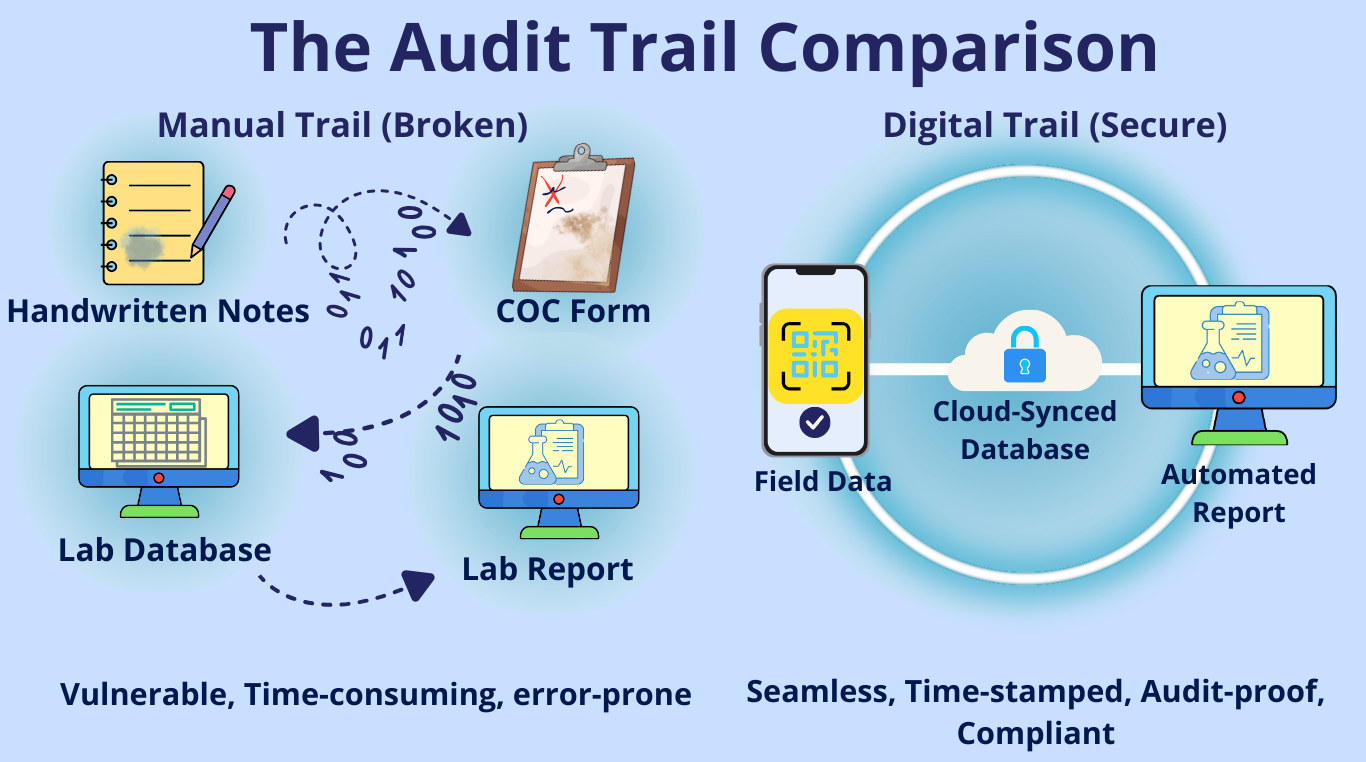
The Chain-of-Custody Crisis
One of the most critical documents in any environmental project is the Chain-of-Custody (COC). The physical and digital integrity of this document is paramount for audit-proofing and compliance.
Yet, many firms still rely on separate physical paper forms and disjointed digital notes. This makes maintaining an undeniable, unbroken audit trail extremely difficult. As one Senior Environmental Scientist noted, when dealing with a high volume of samples, manually writing out and preparing these forms is not just "tedious"—it is a prime opportunity for critical data to fall through the cracks.
Closing the Gap
The industry is realizing that the cost of these errors far exceeds the cost of a digital solution. To eliminate the Data Integrity Gap, data must be captured digitally at the source. By removing the "manual transcription" step entirely, firms can reduce errors by 33% and ensure a seamless, digital audit trail from the field to the lab.
Next week in Part 4: We look toward the future. Is your data ready for the next wave of technology? We explore why disjointed data silos are the biggest barrier to AI and Machine Learning adoption.