
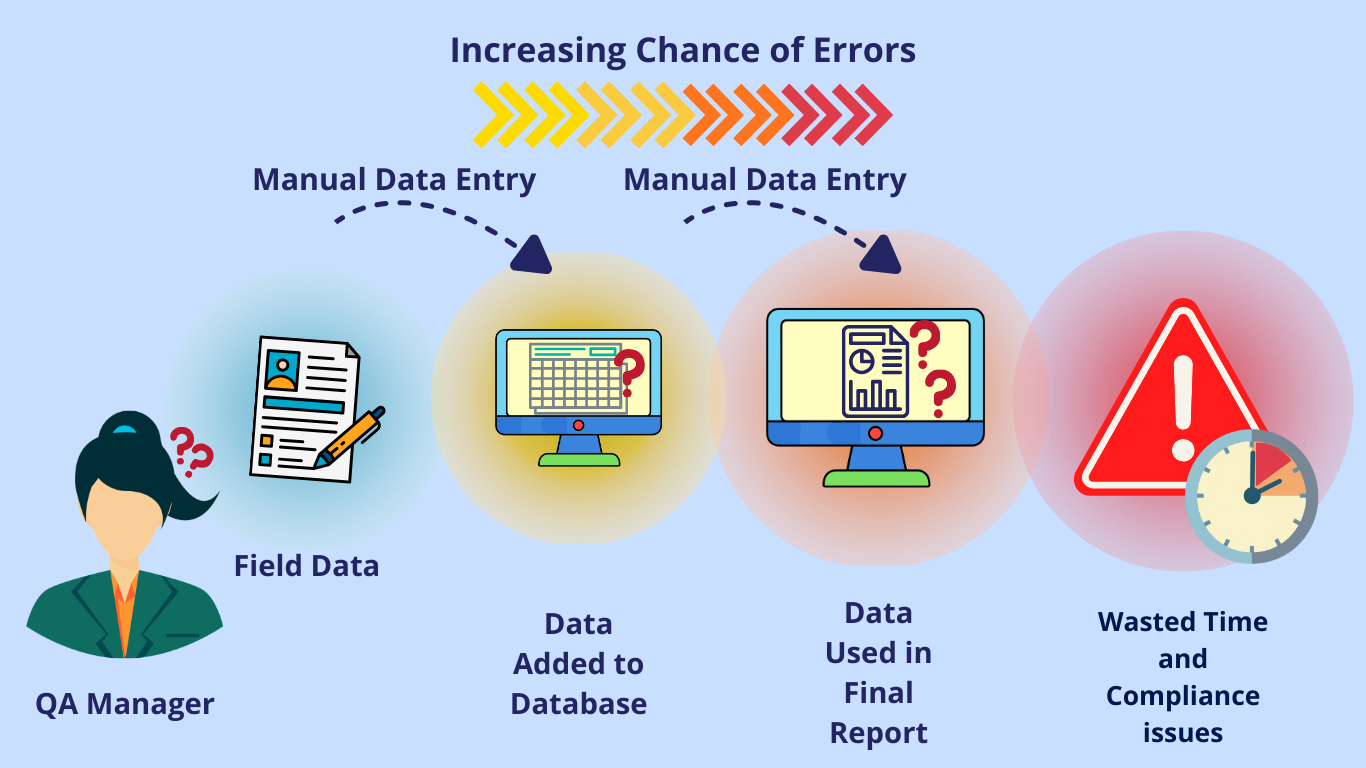
In our previous post, we explored the Transcription Trap and how Project Managers (PMs) and Project Scientists often find themselves manually transcribing data instead of working on more critical tasks. But what happens after the data is funneled into your database or that first draft?
Welcome to Stage 3: The Quality Gate. This is the final line of defense before a report is signed, sealed, and delivered to the client. In a manual workflow, this stage is less of a "gate" and more of a nightmare for the QA/QC Manager.
The "Telephone Game" Comes Home to Roost
By the time a report reaches a Senior Scientist or QA/QC Manager, the data has likely been handled three or four times:
Recorded by a tech using a variety of disjointed tools.
Transcribed by a PM into a spreadsheet or database.
Cross-referenced against a lab report.
Copied and Pasted into a final Word document.
In the industry, we call this the "Degradation of Truth." With every manual touchpoint, the "integrity" of the original field data can slip away. The QA Manager’s job is to play detective, looking for the "glitch in the matrix" that could compromise the entire project.
The Anatomy of a QA Nightmare
What is the QA Manager actually looking for? They are hunting the ghosts of manual entry:
The Mismatched Sample: The report says "Sample 05" was taken in the basement, but the lab report shows a different ID.
The Unit Error: A decimal point shifted during transcription, turning a safe reading into a regulatory violation (or vice versa).
The Missing Proof: A claim in the report that isn't backed up by a photo because the field images were stored separately from the field notes and a mistake happened during manual matching of images to notes.
The Handwritten Mystery: Trying to verify a value against a field log.
The True Cost: The "Investigative Edit"
The most expensive people in your firm—the Principals and Senior Engineers—are often the ones performing QA/QC. When the workflow is manual, they spend their time:
Fact-checking instead of Strategic Reviewing.
Sending reports back for a second (or third) round of edits, killing the project’s remaining profit margin.
Worrying about Professional Liability (E&O).
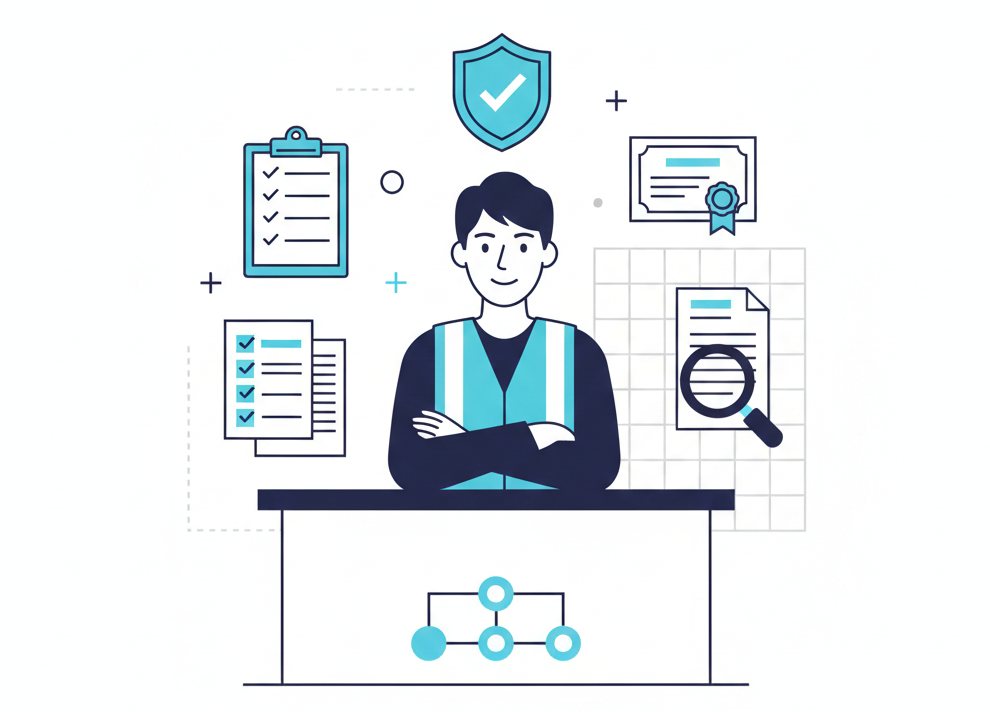
How to Build a Better Gate: Digital Integrity
Breaking the QA nightmare requires Data Traceability. You need to be able to "click" a number in a report and see exactly where it came from.
Digital Audit Trails: When data is captured digitally (Stage 1) and synced (Stage 2), the QA Manager can see the original timestamped entry and the linked photos instantly.
Automated Validation: Systems that flag "out-of-range" values or missing fields before the report even reaches the QA desk.
The Single Source of Truth: Instead of comparing three different documents (Logs, Labs, and Drafts), the reviewer looks at one integrated data set that has never been manually re-typed.
The Result: Confidence, Not Anxiety
When the Quality Gate is powered by digital integrity, the QA Manager moves from policing typos to validating projects and findings. The review process shrinks from days to hours, reports get to clients faster, and the Principal can sign that document with total confidence.
Coming up next: We look at the "Big Picture"—Stage 4: The Scaling Wall, where we see how these individual pains combine to cap your firm's revenue.