
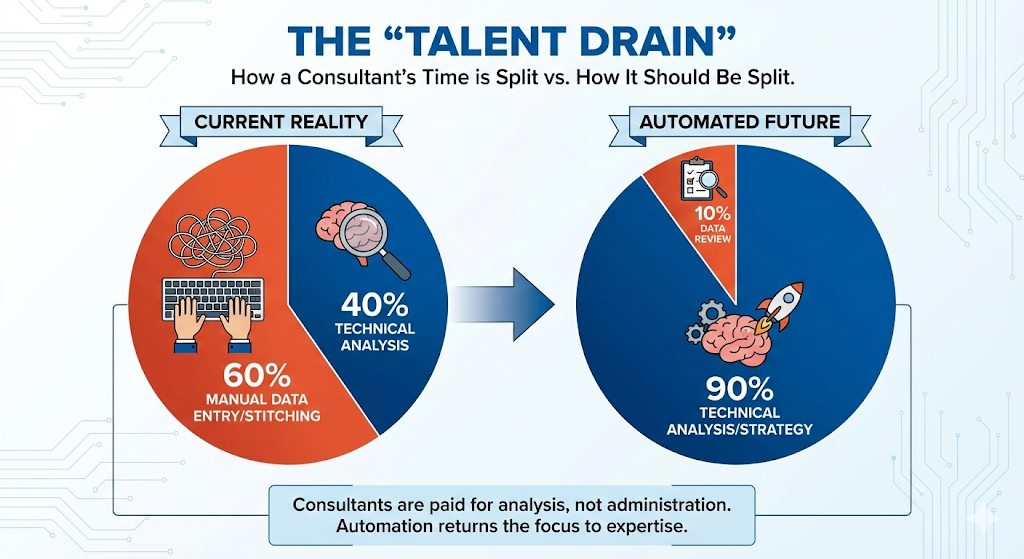
In our previous post, we identified the "Quiet Crisis" of manual data management in the environmental consulting industry. Today, we dive into the first major pain point uncovered by our research with over 350 industry professionals: the Time & Talent Drag.
The math of environmental consulting is straightforward: consultants are paid for their analysis, expertise, and strategic insights. Yet, the current industry standard forces these same experts to spend a massive portion of their week on administrative "re-work".
The "Evening Shift" Phenomenon
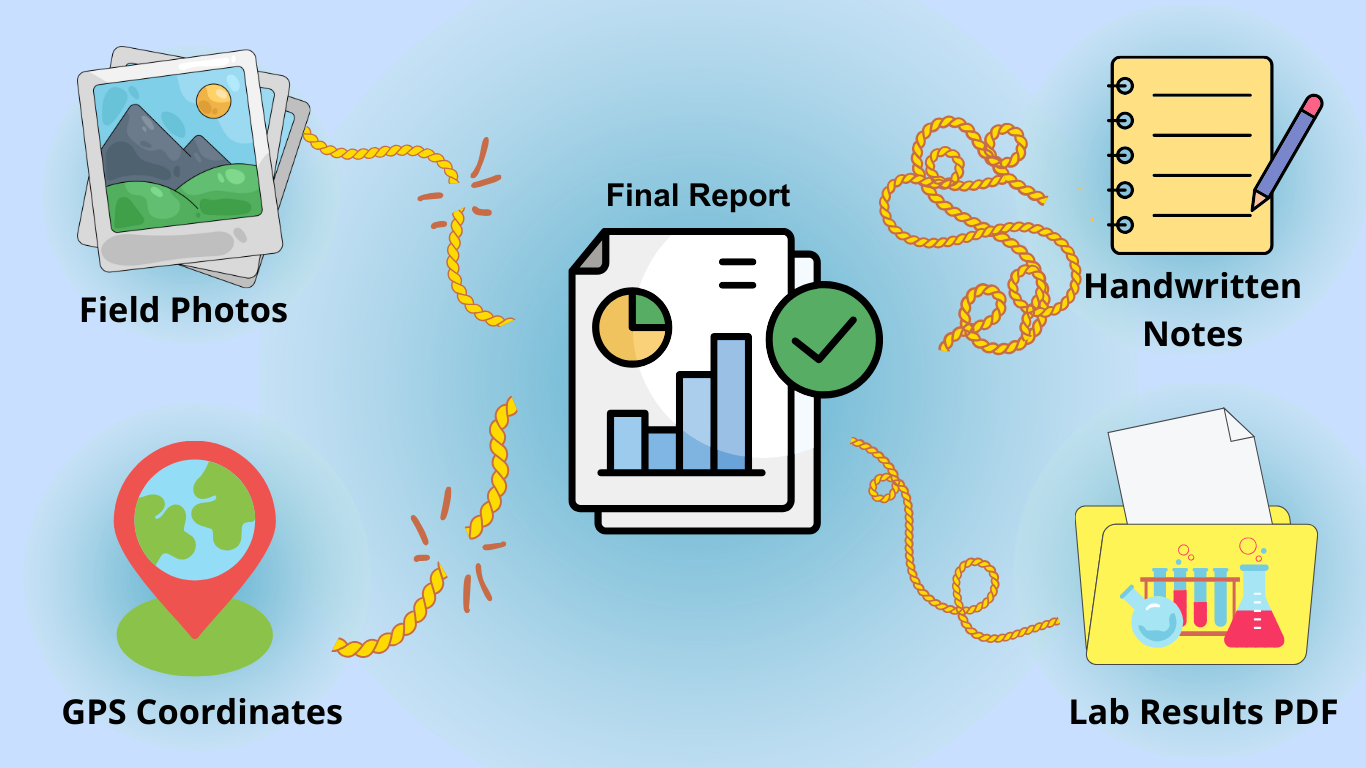
Our interviews revealed a recurring, frustrating pattern for field crews. Because field data is technical and often collected using a mix of analog notebooks and disconnected apps, the data remains "unstructured" and trapped in silos.
As one hazardous materials consultant shared, their field crews spend their daylight hours performing technical work in the field. However, because that data isn't integrated, they must then spend their evenings in the office manually inputting notes into databases and "stitching" information together for the final report.
The "Pre-Report Chore"
This process, which many professionals call a "chore," is a significant drain on project velocity. Resources are wasted as technical staff or administrative personnel spend hours on repetitive tasks:
Sorting pictures and manually matching filenames to sample IDs.
Cross-referencing field notes with laboratory results.
Transcribing metadata manually from different sources into digital spreadsheets.
This inefficient workflow does more than just hurt the bottom line; it contributes to employee burnout. Modern talent expects modern digital tools, and forcing them into antiquated, manual processes makes it harder for firms to retain their best people.
The Ideal: Data That Flows
The solution isn't to work harder; it’s to change the flow of information. As one environmental consultant articulated during our research, the goal is a system where "data once gathered in the field should flow seamlessly to every place it should automatically".
Imagine a scenario where your report template is prepopulated with field data the moment the team leaves the site. When the lab results arrive, they are simply plugged in, and the report is done. By eliminating the manual "stitching" of data, firms can shift their focus back to what they were hired to do: high-level environmental analysis.
Next article in Part 3: We look at the Data Integrity Gap—how manual transcription isn't just slow, it’s a liability that introduces 33% more errors into your operations.